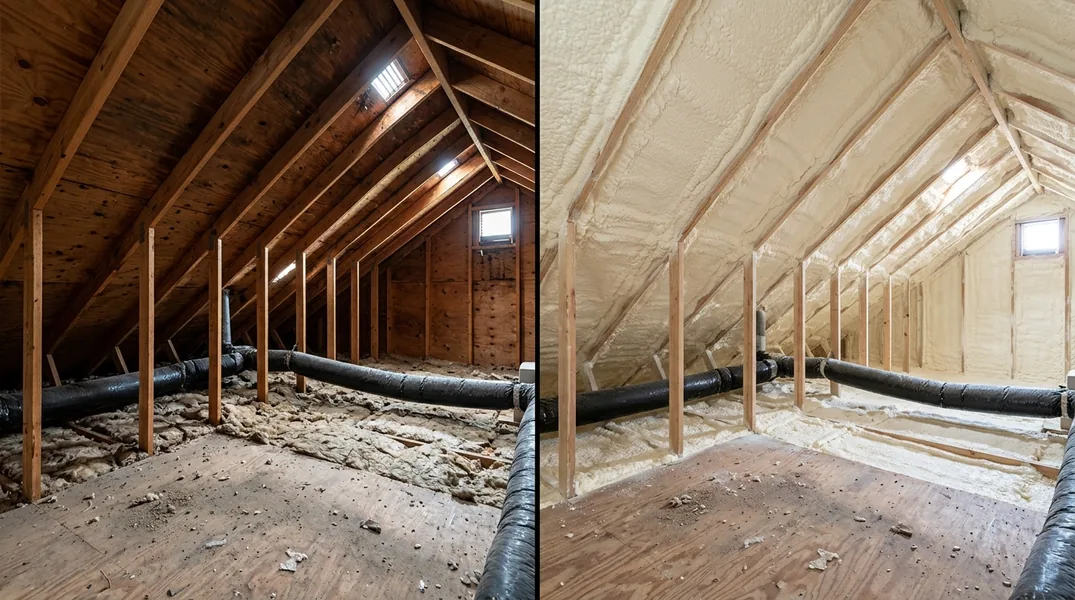
Understanding Slab-on-Grade Construction in Winter Garden
If you own a home in Winter Garden or the greater Orlando area, there's a good chance your house sits on a concrete slab rather than a traditional crawl space or basement. This construction method became popular in Florida decades ago because it's cost-effective, avoids moisture issues from standing water, and works well with our sandy soil composition. However, slab-on-grade homes present unique insulation challenges that many homeowners don't fully understand until they receive their first summer energy bill.
The fundamental issue with slab construction is that concrete conducts heat and cold directly into your living space. Unlike homes with basements or crawl spaces where you can insulate below the house, slab-on-grade properties require a different approach. Your attic becomes the primary battleground for temperature control, especially in Florida's intense heat. This is where choosing the right insulation material makes a dramatic difference in your comfort and utility costs.
Spray Foam vs Blown-In Insulation: Which Wins for Slab Homes
When comparing Attic Spray Foam Insulation to blown-in insulation, the differences become clear when you understand how each material performs in a slab-on-grade home. Blown-in insulation, typically made from fiberglass or cellulose, works by creating a thick blanket of material that slows heat transfer through conduction. It's affordable and easy to install, which explains why many builders choose it as a default option. However, blown-in materials have significant limitations in Florida's climate.
Blown-in insulation leaves small air gaps and voids, particularly around pipes, electrical wiring, and irregular framing members. In a slab-on-grade home where your attic is working overtime to keep heat out, these gaps are problematic. Heat finds its way through those tiny spaces, reducing the overall effectiveness of your insulation system. Additionally, blown-in materials settle over time, meaning the R-value you paid for today may diminish within five to ten years. Spray foam, by contrast, expands to fill every cavity and crack, creating a complete thermal barrier with no gaps.
The air sealing properties of spray foam are particularly valuable for slab homes. Because concrete conducts temperature so efficiently, you need an insulation solution that doesn't just slow heat transfer but also prevents air infiltration. Spray foam does both simultaneously. When you apply spray foam to your attic, it seals air leaks that blown-in insulation would miss, resulting in more consistent indoor temperatures and lower cooling costs throughout the year.
Spray Foam vs Fiberglass: Performance in Florida Heat
Fiberglass batts represent the most common attic insulation in older homes, and many homeowners assume it's adequate simply because it's what they already have. However, fiberglass has inherent weaknesses that become magnified in Florida's climate and especially in slab-on-grade homes. Fiberglass is hygroscopic, meaning it absorbs moisture from humid air. In Orlando and Central Florida, where humidity regularly exceeds 70 percent, moisture absorption is a real concern that affects both the material's performance and your home's air quality.
When fiberglass absorbs moisture, its insulating value decreases. The air pockets within the material become filled with water vapor, which conducts heat far more efficiently than still air. You end up paying for insulation that's working at reduced capacity. Over time, excess moisture in fiberglass can also contribute to mold growth, particularly if your attic lacks proper ventilation. Spray foam, whether Closed Cell Spray Foam Insulation or open cell varieties, resists moisture absorption and actually helps control humidity by creating a more sealed attic environment.
The R-value retention is another critical difference. Fiberglass maintains its rated R-value only under ideal laboratory conditions. In real-world applications, especially in hot climates, fiberglass typically performs at 70 to 80 percent of its stated value due to air movement, temperature fluctuations, and moisture. Spray foam maintains its R-value much more consistently over decades, making it a smarter long-term investment for slab-on-grade homes that depend heavily on attic insulation for temperature control.
Why Spray Foam Outperforms Cellulose for Slab Homes
Cellulose insulation has gained popularity as an eco-friendly alternative, and it does offer some advantages over fiberglass in terms of air sealing and initial R-value per inch. However, cellulose shares fiberglass's moisture sensitivity and adds complexity to installation. Cellulose is made from recycled paper, which means it's inherently susceptible to water damage and mold if exposed to high humidity or any roof leaks. In a slab-on-grade home where your attic is already working hard in Florida's heat, introducing a moisture-prone insulation material is counterproductive.
Cellulose also settles more noticeably than fiberglass over time, sometimes losing 20 percent or more of its thickness within the first few years. This settling directly reduces R-value and creates gaps where heat can penetrate your attic. Additionally, cellulose installation requires specialized equipment and expertise, and any gaps in installation create weak points in your thermal envelope. Spray foam eliminates these concerns entirely. Once applied, it doesn't settle, doesn't absorb moisture, and requires no special maintenance. For homeowners in slab-on-grade properties who want insulation that works reliably year after year, spray foam is simply the superior choice.
Best Insulation for Attic: Why Spray Foam Wins in Central Florida
When evaluating the best insulation for attic spaces in Central Florida, you need to consider your climate, your home's construction type, and your long-term comfort and cost goals. Slab-on-grade homes have specific requirements that blown-in, fiberglass, and cellulose simply cannot meet as effectively as spray foam. The combination of Florida's intense heat, high humidity, and the thermal conductivity of concrete slabs creates an environment where spray foam's superior air sealing and moisture resistance provide measurable benefits.
Spray foam also offers flexibility in application. Open Cell Spray Foam Insulation provides excellent insulation value at a lower cost, while closed cell spray foam delivers even higher R-value per inch and superior moisture resistance for applications where those benefits justify the additional investment. A professional insulation contractor can assess your specific attic, your slab-on-grade home's thermal characteristics, and recommend the spray foam type that delivers the best return on investment. If you're ready to upgrade your attic insulation, contact Orlando Spray Foam Insulation at (689) 219-8153 to discuss your options and get a free estimate.
Attic Spray Foam Insulation Cost in Orlando: What to Budget
Understanding spray foam insulation pricing is essential for making an informed decision. Spray foam typically costs more per square foot than blown-in insulation or fiberglass batts, but the comparison becomes much more favorable when you factor in durability, long-term performance, and energy savings. A typical attic spray foam project in the Orlando area ranges from $1,500 to $5,000 depending on attic size, existing conditions, and whether you choose open cell or closed cell foam. While this represents a larger upfront investment than alternatives, homeowners typically recover that cost through reduced cooling expenses within five to seven years.
Slab-on-grade homes benefit even more dramatically from spray foam's energy savings because your air conditioning system works harder to maintain comfort when insulation is poor. If you're currently using blown-in insulation or fiberglass and experiencing high summer cooling bills, upgrading to spray foam often reduces your energy costs by 15 to 30 percent. Over a decade, those savings compound significantly. Additionally, spray foam requires no future replacement or maintenance, whereas blown-in insulation may need topping off and cellulose may need replacement if moisture issues develop. For accurate pricing specific to your home, reach out to Orlando Spray Foam Insulation and request a free estimate.
Looking for a professional spray foam insulation contractor in Orlando? Orlando Spray Foam Insulation responds fast for all your spray foam insulation needs.
Get a Free Quote