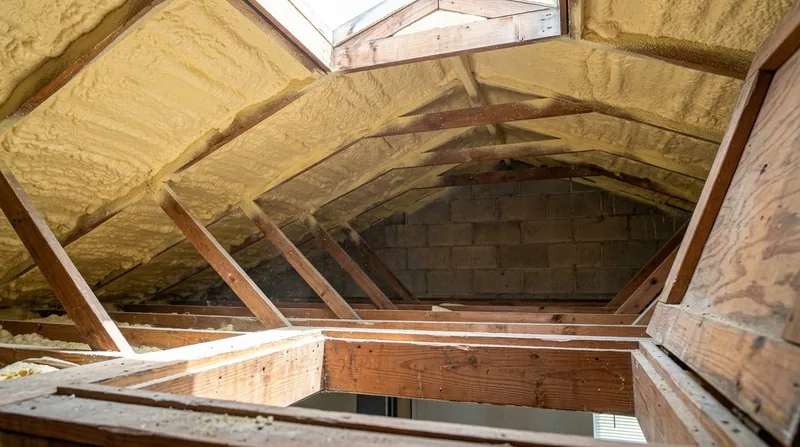




Attic spray foam insulation in Orlando seals the single biggest energy leak in most homes across Orange County. Orlando attics sit in IECC climate zone 2A, where vented spaces pull in hot, damp air most of the year, driving moisture inward through the roof deck and ceiling plane. That moisture drives cooling bills higher and creates the conditions for mold and structural decay. Spray foam closes those air leaks, stops the moisture path, and keeps conditioned air where it belongs: inside your home. Whether you own a mid-century block home in College Park or a newer frame house toward Lake Nona with rooms over garages, the attic is where the cooling battle is won or lost. We seal the attic plane and air seal penetrations so your cooling bills drop across Orange County's long, humid summers.
Why Attic Spray Foam Insulation Matters in Orlando's Hot, Humid Climate
Orlando's climate does not forgive a vented attic. Summers run from May through October with temperatures in the low 90s and humidity above 70 percent most days. A vented attic pulls that hot, damp air through soffit vents and ridge vents, and moisture condenses on the underside of the roof deck where it meets cooler interior air. Fiberglass batts and blown-in cellulose do not stop that air movement, so cooling bills stay high and the attic stays wet. Spray foam seals the attic plane itself, turning a vented, leaky space into a conditioned buffer zone. The result is lower cooling bills, no moisture path into the attic, and no condensation on roof framing or insulation.
- Sealed attics reduce the cooling load on your HVAC system by stopping hot, humid outside air from entering the conditioned space.
- Spray foam blocks the moisture path that drives mold growth and accelerates rot in roof framing, especially in older block homes.
- Air sealing around ductwork, electrical penetrations, and plumbing stacks keeps conditioned air in the rooms where you live and work.
- A properly sealed attic keeps rooms over garages cooler and more comfortable without oversizing your air conditioning unit.
Each of these factors compounds across Orange County's six-month cooling season, and the payoff is measurable in your electric bill.
Key info: Orlando's building code requires either a vented attic or a sealed attic, never both. If you seal the attic plane with spray foam, soffit and ridge vents must be blocked. The building official at your city or county will verify this during inspection. Always check with your local building department before any work begins.
For more detail on how moisture and air leakage drive energy loss in Florida homes, see the ENERGY STAR guidance on sealing and insulating Florida homes.
How We Seal Your Attic: The Process From Start to Finish
Attic spray foam work starts with a clear picture of what you have now and what the space needs. We inspect the attic, measure dimensions and existing insulation, identify air leaks around ductwork and penetrations, and check for any moisture or contamination that must be fixed before we spray. Once we understand the job, we lay out a plan: what type of foam (closed cell or open cell), what thickness and R-value you need for Orlando's climate, and where air sealing will happen. We then prep the space, protect areas that should not be sprayed, set up mechanical ventilation so fumes exit during cure, and spray the foam in controlled passes to build the specified thickness. After cure (typically 24 to 48 hours), you can re-enter the space safely. We also handle insulation removal if old fiberglass or blown-in insulation must come out first.
- We measure your attic and review existing insulation, ductwork, and any signs of moisture or prior damage.
- We recommend closed cell or open cell foam based on your space, your R-value target, and your budget.
- We set up mechanical ventilation during spray and cure so you and your home are safe from fume exposure.
- We spray foam in even passes at the correct thickness and ratio, verified by our crew on site.
- We air seal penetrations around electrical boxes, plumbing vents, and ductwork so no conditioned air leaks into the attic.
- We verify the finished job meets your local building code and is ready for inspection if required.
The whole process takes one to three days depending on attic size and how much insulation must be removed.
Local example: A 1,500-square-foot attic in Winter Park with old fiberglass and no air sealing typically takes two days. Day one is removal and prep. Day two is foam spray, air sealing, and ventilation setup. You stay out of the attic for 24 to 48 hours while the foam cures. After that, the space is yours to use for storage or mechanical equipment.
Learn more about our air sealing service and how it works alongside spray foam to stop energy leaks.
Attic Spray Foam Methods: Closed Cell vs. Open Cell
| Approach | Description | Best for |
|---|---|---|
| Closed Cell Spray Foam | High-density foam with closed cell structure. Stops air and moisture. R-value roughly 6.0 per inch. Denser, stronger, more expensive per board foot. | Attics where moisture control is critical, metal buildings, rooms over garages, areas with high humidity or prior condensation. |
| Open Cell Spray Foam | Lower-density foam with open cell structure. Stops air leakage. R-value roughly 3.5 per inch. More affordable, lighter, allows some moisture vapor transmission. | Budget-conscious attic sealing where moisture is not the primary concern, sound dampening, interior attics without exterior exposure. |
| Closed Cell Top-Up Over Fiberglass | Spray a thin closed cell layer over existing fiberglass to add R-value and seal air leaks without removing the old insulation. | Attics with sound fiberglass in place but inadequate R-value or air leakage, when full removal is not necessary or cost-prohibitive. |
| Full Removal and Closed Cell Replacement | Remove old fiberglass, cellulose, or failed foam. Clean the substrate. Spray new closed cell foam to full depth for complete air sealing and moisture control. | Attics with contaminated, settled, or failed insulation, or when you need maximum R-value and zero air leakage for Orlando's climate. |
Orlando's heat and humidity favor closed cell foam for most attics, especially in older homes where moisture has already caused damage. However, if your attic is dry and you are looking to seal air leaks on a budget, open cell can work. We assess your space and recommend what actually makes sense for your home.
Attic Spray Foam Insulation Cost in Orlando: What to Expect
Attic spray foam insulation in Orlando typically starts at $1.50 per square foot for open cell and runs higher for closed cell, depending on the depth you need and how much existing insulation must be removed. A 1,500-square-foot attic with existing fiberglass and no removal usually costs between $2,000 and $4,500 for closed cell. Open cell tops out lower but still delivers air sealing. The real variables are attic size, how much old insulation comes out, and how much air sealing is needed around ductwork and penetrations. A top-up of 2 inches of closed cell over sound fiberglass costs less than a full removal and spray. An attic with standing water, mold, or contaminated insulation will cost more because we fix the moisture source first or we walk away.
Getting written estimates from at least two contractors is the only way to know what your job will cost. Every attic is different, and a real estimate includes R-value, thickness, square footage, and what is included in the price. Avoid any contractor who quotes a price over the phone without seeing the space. We provide written estimates with R-value and thickness specs at no charge within 24 hours of your call to (689) 219-8153. See our full pricing overview for guidance on typical costs and what affects them.
What to Look for When Hiring an Attic Spray Foam Insulation Contractor Near Me in Orlando
The spray foam trade has two extremes: rig-and-run crews from out of state who spray fast and disappear when the smell will not go away, and national franchises who send subcontractors with no local accountability. A local independent contractor with a local address and local insurance is your best protection. When you call any spray foam contractor, ask for proof of insurance, check references from jobs in your neighborhood, and request a written estimate with R-value and thickness clearly stated. Never accept a price without an on-site inspection, and never hire someone who promises immediate re-entry or says you can enter the attic the same day. Mechanical ventilation during cure and a 24 to 48-hour re-entry window are the marks of honest work. Also ask how they handle permits if your city or HOA requires one. We are fully insured and can provide proof of coverage and references from homes across Winter Park, College Park, Baldwin Park, and every other neighborhood in Orange County.
Call us at (689) 219-8153 or visit our contact page to request a free, no-obligation estimate for your attic.
Attic Spray Foam Insulation in Orlando: Pricing Guide
| Service | Price | Details |
|---|---|---|
| Open Cell Spray Foam, Attic Seal | Starting at $1.50/sq ft | Air sealing and R-value boost for dry attics, lower cost than closed cell, best for sound dampening and budget-conscious jobs |
| Closed Cell Spray Foam, Full Attic | Starting at $2.50/sq ft | Moisture control and high R-value for humid climates, typical 1,500 sq ft attic runs $2,500 to $4,500 depending on existing insulation and removal needs |
| Insulation Removal and Replacement | On estimate | Old fiberglass or cellulose tear-out, disposal, substrate prep, and new spray foam require site inspection to quote accurately |
| Top-Up or Partial Seal | Starting at $1.50/sq ft | Spray thin closed cell layer over existing insulation to add R-value and seal air leaks without full removal, cost-effective upgrade |
| Estimate and Inspection | Free | Written estimate with R-value and thickness specs, response within 24 hours at (689) 219-8153, no obligation to book |
Indicative pricing, the exact cost depends on square footage, finish, and site access. Free personalized estimate within 24h at (689) 219-8153.


