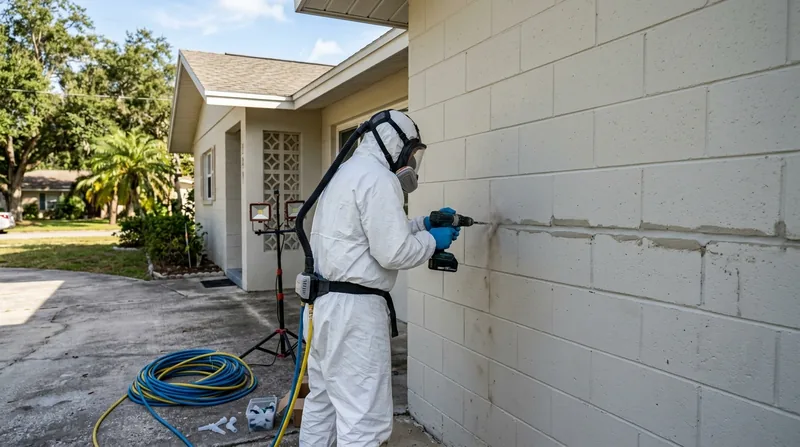




Wall and injection foam insulation in Orlando fills the hidden cavities inside the masonry block walls that define the older neighborhoods around Lake Eola, Winter Park, and College Park. These mid-century homes were built with solid block exterior walls and no insulation whatsoever, leaving rooms cold in winter and hot in summer while humidity works through the masonry year-round. Injection foam reaches those cavities without tearing open finished walls, raising R-value and air tightness in place. In Orlando's hot, humid climate where moisture drives most insulation failures, sealing the block wall cavity is often the single biggest comfort gain a homeowner can make short of a full attic rebuild. This work is fast, clean, and transforms living spaces that have never been truly insulated.
Why Block Wall Insulation Matters in Orlando's Older Neighborhoods
Orlando's architectural character comes from its mid-century stock, especially in the tree-lined blocks of College Park, Baldwin Park, and Winter Park. Block construction was cheap and durable, but it was never insulated. In a climate that runs hot and humid from April through November and holds moisture even in winter, an uninsulated block wall is a thermal bridge and a moisture path rolled into one. Air conditioning runs harder to condition rooms with exterior walls, and that cool air leaks out through the block itself. Injection foam stops both problems at once.
- Uninsulated block walls account for 30 to 40 percent of cooling load in single-story homes with long exterior perimeters.
- Humidity enters through the block cavity and condenses on the interior finish, raising mold risk and wall rot over decades.
- Injection foam adds R-value (typically R-3.5 to R-4 per inch) without opening the wall or disturbing finished surfaces.
- A room over a garage or a west-facing bedroom in block can drop 5 to 8 degrees Fahrenheit once the wall cavity is sealed.
Homes in Winter Park and the older subdivisions around Lake Eola see the biggest returns because the block walls run the full height of the house and carry the most sun exposure.
Local example: A 1960s block home in College Park with two exterior walls running east and west will cool 3 to 5 degrees cooler on the afternoon side once the block cavity is filled. The difference compounds over a whole summer, and humidity stops penetrating the wall from outside.
For guidance on what permits and inspections apply to your address in Orlando, check the City of Orlando Building Services website, which governs insulation work within city limits.
How We Perform Injection Foam Insulation in Orlando Homes
Injection foam work starts with a careful site survey to locate the block cavity, measure its depth, and confirm access points. We drill small holes (typically 1 to 1.5 inches) into the mortar joints at regular intervals, inject low-pressure polyurethane foam, and seal the holes when the foam cures. The whole process takes a few hours for a typical room, and you can repaint or patch the wall immediately after. We work from inside the home, so no exterior scaffolding or disruption to your landscaping or neighbors.
- We survey the wall cavity depth and width using acoustic imaging or probe testing to confirm foam volume needed.
- Holes are drilled into mortar joints at 16-inch centers, allowing the foam to fill the entire cavity without voids.
- Low-pressure injection (typically 0.5 to 1 PSI) prevents mortar joint blow-out and ensures even fill.
- Holes are sealed with hydraulic cement or caulk matched to your mortar color.
- A ventilation fan runs during injection and for 24 hours after to manage any odor from the curing foam.
The job is complete when the foam has cured and the wall is ready for paint or wallpaper. If you are also addressing the attic, we often pair injection foam with attic spray foam insulation to seal both the walls and the roof deck in one project.
Real scenario: A homeowner in Winter Park with a 1970s block home and a west-facing master bedroom calls us in July when cooling bills spike. We inject the bedroom walls and the adjoining hallway wall, then seal the attic rim joist where it meets the block. Total time on site is about 4 hours, and the room runs 6 degrees cooler by August.
Injection Foam Methods and What Works Best
| Method | Description | Best for |
|---|---|---|
| Low-pressure injection polyurethane | Open-cell or closed-cell foam injected at 0.5 to 1 PSI through drilled holes in mortar joints. | Standard block cavity fill in existing homes without disturbing finished surfaces. |
| Acoustic imaging locating | Non-destructive survey of cavity depth and width before drilling to optimize hole placement and foam volume. | Homes where cavity geometry is uncertain or where wall thickness varies (common in older block construction). |
| Closed-cell injection foam | Denser foam (typically R-6 per inch) with higher moisture resistance and air-sealing performance. | Block walls in humid climates where moisture penetration is the primary concern, or in rooms over garages. |
| Open-cell injection foam | Lower-density foam (typically R-3.5 per inch) with softer set and easier cleanup, semi-permeable to vapor. | Interior block walls where cost is a priority and the wall will not be exposed to standing water or high humidity sources. |
Closed-cell foam is the standard choice for Orlando block walls because the humidity load is constant and the R-value per inch is higher. Open-cell injection is less common but can work on interior walls where vapor permeability is an asset.
Wall and Injection Foam Insulation Cost in Orlando: What to Expect
Wall and injection foam insulation pricing in Orlando runs from $2 to $4 per square foot of wall surface, depending on cavity depth, foam type (open or closed cell), and access. A typical 12-by-14-foot bedroom with two exterior block walls (roughly 350 to 400 square feet) will run between $700 and $1,600 in material and labor. The biggest cost drivers are the depth of the cavity (deeper cavities need more foam), the choice of closed-cell versus open-cell (closed-cell costs more but performs better in humidity), and whether the wall has obstacles like electrical outlets or plumbing that require careful drilling around.
Travel within Orlando and the surrounding service areas (Winter Park, Kissimmee, Sanford, Apopka, and beyond) is included in the estimate with no mileage surcharge. A free written estimate will specify the wall area, cavity depth, foam type, R-value, and total cost before we start. Most jobs take a single day, so labor is a one-time event rather than a multi-visit project. If you are also doing attic work, crawl space foam, or rim joist sealing, we can bundle the pricing and often save you money on setup and travel.
For a detailed pricing breakdown and to see how your specific wall dimensions and foam choice affect the final cost, visit our full pricing page.
Wall and Injection Foam Insulation Near Me: What to Look for When Hiring a Spray Foam Contractor
Hiring the right contractor matters because injection foam is a one-time investment that will sit inside your walls for decades. A poor installation (voids, mismatched foam density, no ventilation during cure) will leave cold spots and moisture problems that are expensive to fix later. The best contractors in Orlando and the surrounding areas share a few hallmarks: they provide written estimates with cavity depth, foam type, and R-value clearly stated; they explain the difference between open and closed-cell foam and why one is right for your wall; they run mechanical ventilation during and after the injection; and they are fully insured and can provide proof of coverage.
- Ask for a written estimate that names the foam type, cavity depth, R-value per inch, and total square footage of wall to be filled.
- Verify that the contractor carries general liability insurance and can provide a certificate of insurance before work starts.
- Confirm that ventilation will run during injection and for at least 24 hours after to manage odor and ensure proper cure.
- Get references from at least two previous customers in your neighborhood (Winter Park, College Park, or wherever your home is located) and call them to ask about comfort gains and any odor issues.
- Check whether your HOA has rules about interior wall work or exterior patching, and confirm that the contractor will work within those guidelines.
- Ask about the re-entry window (typically 24 to 48 hours after injection) and what precautions you should take during cure.
Permitting for injection foam work varies by city and neighborhood within Greater Orlando. Some areas require a permit for any wall cavity work, while others do not. A good contractor will know what applies at your address and will help you navigate the local building department if a permit is needed. Call the City of Orlando Building Services or your local city office to confirm before you sign a contract.
When you are ready to move forward, contact us for a free estimate at (689) 219-8153. We will survey your walls, explain your options, and provide a firm price with no obligation to book.
Wall & Injection Foam Insulation in Orlando: Pricing Guide
| Service | Price | Details |
|---|---|---|
| Open-cell injection foam | Starting at $2/sq ft | Interior block walls, lower cost, R-3.5 per inch, best for non-exposed cavities and cost-conscious budgets |
| Closed-cell injection foam | Starting at $3.50/sq ft | Standard for Orlando humidity and moisture control, R-6 per inch, denser performance, blocks vapor and air |
| Cavity survey and acoustic imaging | Included | Non-destructive depth and width measurement to optimize hole placement and prevent overfill or voids |
| Typical bedroom (350-400 sq ft walls) | $700-$1,600 | Two exterior block walls with standard 2-4 inch cavities, open or closed-cell foam, holes sealed and patched |
| Large multi-room project or unusual geometry | On estimate | Walls with varying thickness, plumbing or electrical obstacles, or cavity depths over 6 inches require site inspection |
| Free estimate and consultation | No charge | Written quote within 24 hours, (689) 219-8153, includes foam type recommendation and R-value calculation |
Indicative pricing, the exact cost depends on square footage, finish, and site access. Free personalized estimate within 24h at (689) 219-8153.


