Understanding Your Winter Park Home's Insulation Needs
Winter Park homeowners often face a critical decision when it comes to attic insulation: should you invest in strategic air sealing, or is a complete Attic Spray Foam Insulation upgrade the better choice? The answer depends on your home's current condition, your energy goals, and your budget. Before making any decision, it helps to understand what each approach offers and how they compare in terms of performance and long-term value.
The climate in Winter Park presents unique challenges. While Florida winters are mild compared to northern states, the cooling season dominates most of the year. Your attic can reach temperatures exceeding 140 degrees Fahrenheit in summer, and poor insulation allows that heat to transfer into your living spaces. This directly impacts your air conditioning costs and comfort levels. Understanding the difference between air sealing and full foam insulation is the first step toward making an informed choice for your home.
What Is Air Sealing and When Does It Make Sense?
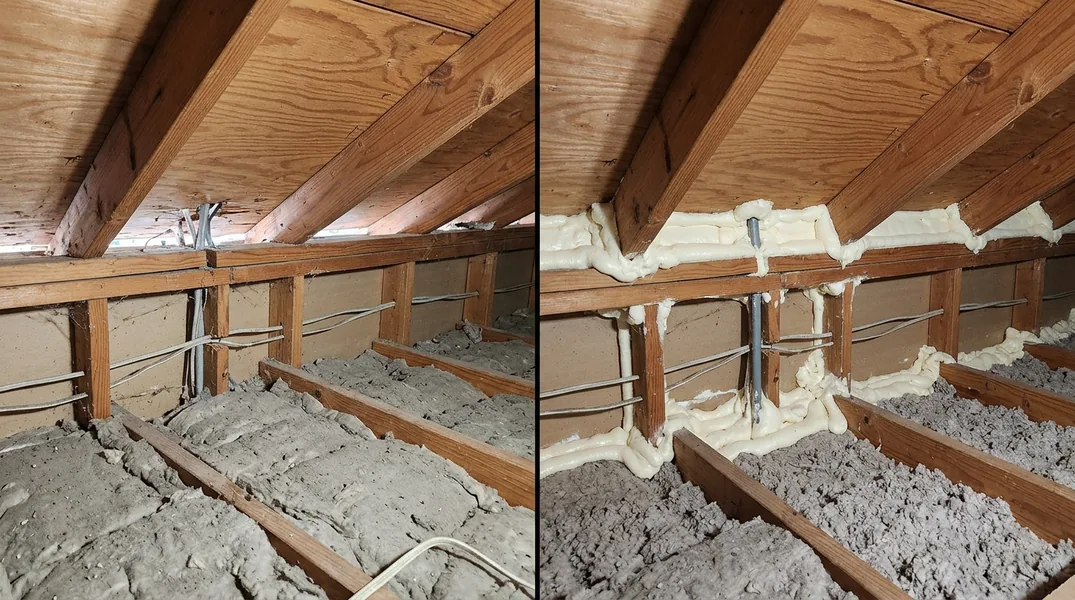
Air sealing focuses on closing gaps, cracks, and holes in your attic that allow conditioned air to escape and unconditioned air to enter. Common problem areas include gaps around pipes, electrical penetrations, ductwork, attic access doors, and where walls meet the roof line. A professional air sealing job typically involves using caulk, weatherstripping, foam sealant, or rigid barriers to block these pathways. For homeowners with existing insulation that is still in decent condition, air sealing can be a cost-effective way to improve energy efficiency without a complete overhaul.
Air sealing works best when your current insulation meets or comes close to meeting your state's R-value requirements. Florida's energy code generally recommends R-30 to R-38 for attic insulation, depending on your specific location. If your attic already has adequate insulation depth and the material is relatively new and undamaged, sealing air leaks alone may boost your energy performance by 10 to 20 percent. However, if your insulation is thin, compressed, or settling unevenly, air sealing alone may not deliver the results you need.
Spray Foam Insulation R Value Per Inch: Why It Matters
One of the most important factors in choosing between air sealing and full insulation replacement is understanding insulation performance, measured in R-value. Closed Cell Spray Foam Insulation typically delivers an R-value of 6.0 to 7.0 per inch, while Open Cell Spray Foam Insulation provides approximately 3.5 to 3.6 per inch. This difference is significant. Closed cell foam is denser and offers superior thermal resistance in a thinner application, while open cell foam is lighter, more flexible, and more affordable but requires greater thickness to achieve the same R-value.
For a Winter Park attic, closed cell spray foam is often the preferred choice because it achieves higher R-values in less space. This matters if your attic has limited clearance or if you want maximum insulation performance. A 5-inch application of closed cell foam delivers approximately R-30 to R-35, while the same thickness of open cell foam provides only R-17 to R-18. Understanding these differences helps you see why full foam insulation can outperform air sealing alone. The complete air sealing benefit of spray foam, combined with its superior insulation value, creates a comprehensive solution that traditional air sealing cannot match.
How Thick Should Spray Foam Be for Your Orlando Home?
The ideal thickness of spray foam depends on your local building codes, your climate zone, and your energy efficiency goals. Florida's current energy code suggests R-30 minimum for attics in most areas, though higher values like R-38 or R-49 are increasingly recommended for optimal comfort and utility savings. In Orlando and surrounding areas, most contractors recommend a minimum of 5 to 6 inches of closed cell spray foam to meet code and deliver meaningful energy savings. Some homeowners opt for 7 to 8 inches if they want superior performance and long-term cost recovery through reduced heating and cooling bills.
The thickness calculation also depends on which type of foam you choose. If you select open cell foam, you would typically need 10 to 12 inches to achieve R-38 performance, which may not fit your attic space. Closed cell foam's superior density allows you to achieve code-compliant R-values in a more practical thickness. During your initial free estimate with Orlando Spray Foam Insulation, a professional can assess your attic dimensions, measure your current insulation, and recommend the optimal thickness for your specific home and goals.
R Value Requirements by State and Local Codes
Florida's energy code, which applies to Winter Park and the greater Orlando region, mandates a minimum R-value of R-30 for attic insulation. However, it is important to understand that this is a baseline, not a recommendation for optimal performance. Many energy-conscious homeowners and builders are moving toward R-38 or higher to reduce long-term utility costs and improve indoor comfort. The Florida Building Code is updated periodically, and staying informed about current standards helps you make future-proof decisions for your home.
Beyond state code, local utility companies and energy efficiency programs sometimes recommend higher R-values to qualify for rebates or incentive programs. This is where understanding insulation tax credits and rebates becomes valuable. Some utility providers in the Orlando area offer incentives for attic insulation upgrades that exceed minimum code requirements. Before you proceed with any insulation project, ask Orlando Spray Foam Insulation about current incentive programs. At (689) 219-8153, our team can help you identify available rebates and ensure your project qualifies for maximum savings.
Insulation Tax Credit and Rebates: How to Maximize Your Savings
One of the most overlooked advantages of upgrading your attic insulation is the potential for tax credits and rebates. The federal government has periodically offered tax credits for energy-efficient home improvements, including insulation upgrades. While the specifics of these programs change, many homeowners can recover 10 to 30 percent of their project costs through federal tax credits. Additionally, state and local utility companies often provide rebates for insulation work that meets certain efficiency standards. In Florida, some programs offer rebates of 10 to 15 percent of your total insulation project cost.
To take advantage of these incentives, you need to work with a qualified contractor who understands current tax credit eligibility and can document your project properly. Orlando Spray Foam Insulation stays current on available programs and can guide you through the process. When you call (689) 219-8153 or request a free estimate, be sure to ask about tax credits and rebates. Our team can help you understand what incentives apply to your specific situation and ensure your project is completed in a way that qualifies for maximum financial benefit. Between federal tax credits, utility rebates, and long-term energy savings, a full attic foam upgrade often pays for itself within 5 to 8 years.
Air Sealing Versus Full Foam: Making the Right Choice for Your Home
So, which approach is right for your Winter Park home? The answer depends on several factors. If your attic insulation is relatively new, evenly distributed, and meets or exceeds R-30, air sealing alone may be a smart, budget-friendly choice. You can expect modest energy savings and improved comfort at a lower upfront cost. However, if your insulation is old, thin, settling, or below code standards, a full Attic Spray Foam Insulation upgrade delivers superior long-term value. Full foam insulation provides complete air sealing, superior thermal resistance, and better moisture control all in one solution.
Full foam insulation also offers benefits that air sealing cannot match. Spray foam creates a monolithic air barrier that seals every gap and crack simultaneously. It does not settle or compress over time like traditional fiberglass or cellulose. It resists moisture and mold growth better than conventional materials. And when you factor in federal tax credits and utility rebates, the net cost of full foam becomes much more competitive. For most Winter Park homeowners, especially those planning to stay in their home long-term, full attic spray foam insulation represents the smarter investment. Contact Orlando Spray Foam Insulation today at (689) 219-8153 to discuss your specific situation and receive a detailed recommendation based on your home's needs and your budget.
Looking for a professional spray foam insulation contractor in Orlando? Orlando Spray Foam Insulation responds fast for all your spray foam insulation needs.
Get a Free Quote